
Your Guide to the Perfect Custom CD Mix
Making a custom CD mix isn’t just about burning songs onto a disc. It’s about creating a physical, tangible piece of a musical experience—something a fleeting digital playlist can never quite match. You’re turning a handpicked collection of tracks into a real gift, a personal soundtrack, or a keepsake, complete with your own artwork.
Why Custom CDs Are More Than Just Nostalgia
In a world overflowing with streaming services, the very act of making a custom CD can feel a bit rebellious. With millions of songs just a click away, why put in the effort? It all comes down to the intention and connection that only physical media can offer. A custom CD mix is more than just music; it’s a tangible artifact that tells a story.
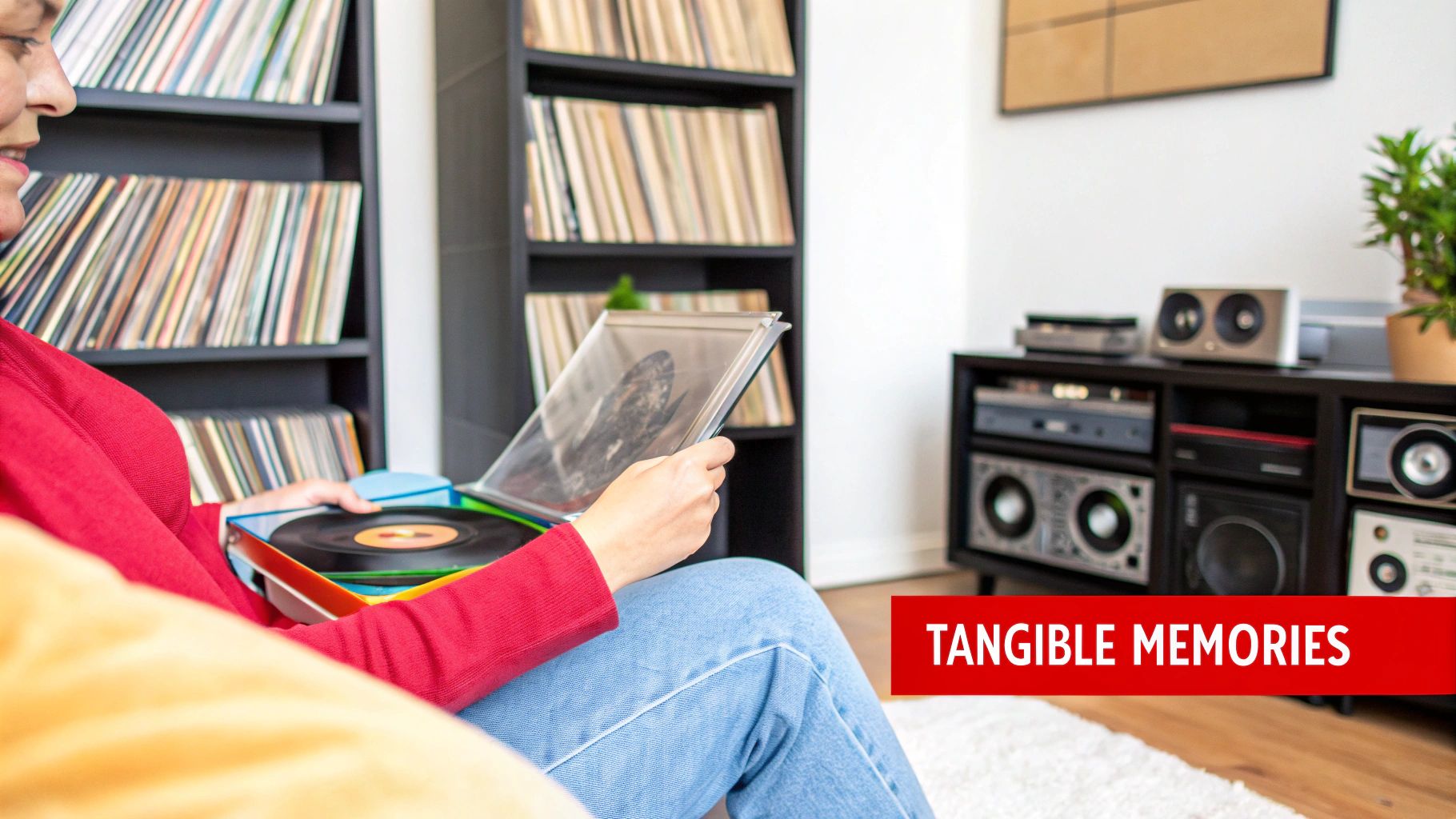
The Power of a Physical Mixtape
Think about the last truly personal gift you received. A thoughtfully curated CD carries that same weight. It’s a soundtrack made for a specific moment or person—a road trip, a wedding, or a birthday. Each track is chosen for a reason, building an emotional narrative that algorithm-driven playlists just can’t replicate.
Beyond that personal touch, plenty of people still swear by the audio quality of CDs. The uncompressed sound delivers a richer, more detailed listening experience than the compressed audio files on most streaming platforms. That commitment to quality is a huge part of why physical media still has a dedicated following.
A custom CD mix is a statement. It says, “I spent time thinking about you and these songs.” It’s an experience you can hold in your hands, not just another link lost in a sea of messages.
A Surprising Resurgence
This isn’t just a feeling; the numbers back it up. Physical media, especially CDs, has seen an unexpected comeback, often driven by younger music fans looking for a more authentic connection.
The market shows this clearly. Global recorded music revenues hit around $29.6 billion in 2024, with physical formats holding their own. In the first half of 2024 alone, U.S. CD sales reached an impressive $236.7 million, easily beating digital downloads. You can dig into more of these global music trends on IFPI.org. All this data proves that the demand for a genuine custom CD mix is real and growing.
How to Curate a Memorable Tracklist
The heart of any great custom CD mix is the story it tells. This is about more than just throwing your favorite songs together; it’s about crafting a genuine listening journey. The first move is always to lock in a theme that guides every single choice.

Your theme can be anything, really. It just needs to give the collection a purpose. Making a mix for a friend’s birthday? Maybe the theme is “High School Memories,” packed with inside jokes and songs from your glory days. For yourself, it could be something like “Coffee Shop Focus”—a perfect blend of instrumental and lo-fi tracks to help you get in the zone.
Once you’ve got your theme, the real artistry begins: sequencing the tracks. You’re building an emotional arc, not just a random playlist.
Building Your Musical Narrative
I always think of a tracklist like a three-act story. It needs a strong opener to hook the listener, a compelling middle that explores the theme, and a memorable closer that feels final. This structure is what keeps a mix from feeling flat or, even worse, boring.
For a road trip CD, I’d kick things off with a high-energy anthem to get everyone hyped. The middle section could then ease into more reflective, mellow tracks for those long stretches of highway driving. To wrap it up, the closer should be an optimistic song that feels like you’ve finally arrived at your destination.
A successful custom CD mix isn’t just a collection of songs; it’s a curated experience. The flow from one track to the next is what turns a simple playlist into an unforgettable soundtrack.
To get that seamless flow, pay close attention to the tempo and key of the songs you place next to each other. They don’t have to be a perfect match, but a sudden jump from a slow ballad straight into a fast punk track can be pretty jarring. Aim for gradual shifts in energy to guide the listener’s mood.
A Framework for Your Theme
Choosing the right songs for each “act” of your mix is where the magic happens. To get you started, I’ve put together a quick table to help you brainstorm. Think of it as a guide for pairing themes with the right song archetypes.
Tracklist Theme Ideas and Song Archetypes
| Theme Idea | The Opener (High-Energy) | The Mid-Point (Reflective) | The Closer (Memorable) |
|---|---|---|---|
| 90s Throwback Party | A classic pop-punk anthem | An iconic R&B slow jam | An end-of-night singalong |
| Summer Road Trip | An upbeat indie rock song | A chill, dreamy synth-pop track | A nostalgic, feel-good classic |
| Workout Motivation | A high-BPM electronic track | A steady, rhythmic hip-hop beat | A triumphant, powerful rock song |
This table should give you a solid jumping-off point for building a balanced mix that really hits the mark.
Ultimately, curating a custom cd mix is all about being intentional. Every single song needs to earn its spot and add something to the overall story you’re telling. That thoughtful process is what makes the final CD so personal and special.
Designing Your CD Artwork and Packaging
A great custom CD mix is more than just the music—it’s the whole experience. The artwork is the first thing anyone sees, and it sets the stage for the songs inside. This is your chance to create something physical that looks every bit as good as it sounds.
You don’t have to be a graphic designer to pull this off. Easy-to-use tools like Canva have pre-sized templates made specifically for CD jewel case inserts and the disc face itself. You can drop in personal photos, scroll through thousands of fonts, and lay out your tracklist cleanly. It makes designing your custom cd mix feel less like a chore and more like part of the creative fun.
Matching Visuals to Your Vibe
The real secret is making the design match the mood of the music. If you’re putting together a high-energy workout mix, go for bold fonts and bright, dynamic colors. But if it’s a sentimental anniversary gift, you’ll want to lean into softer colors, elegant script fonts, and maybe a favorite photo of the two of you to give it that personal touch.
Pay close attention to the tracklist layout. Make sure the font is easy to read and pops against the background. A classic mistake is using tiny, thin text that’s impossible to see. Always prioritize clarity before you get too fancy with the style.
Your CD packaging isn’t just a case; it’s part of the gift. The right design choices elevate a simple disc into a keepsake, showing just how much thought you put into the entire thing.
Choosing the Right Packaging
The packaging you choose is the final piece of the puzzle. The classic jewel case is always a solid, sturdy option that everyone recognizes, but other choices can give your project a unique personality.
For instance:
- Slimline Jewel Cases have a thinner, more modern feel, making them perfect for mailing or handing out as party favors.
- Eco-Wallets are a great cardboard-based option that gives your mix a more rustic, environmentally friendly vibe.
- Simple Paper Sleeves with a clear window are minimalist and budget-friendly, putting all the focus right on your disc art.
Each option shapes the final impression of your custom mix. To get a better idea of how different designs look in practice, take a look at these examples of CD cover and case layouts. At the end of the day, the goal is a cohesive package where the artwork and music come together to tell a complete story.
Preparing Your Files for Flawless Production
Okay, you’ve nailed down your tracklist and the artwork is looking sharp. Now comes the technical part—getting everything prepped perfectly for production. This stage is absolutely critical. It’s what separates a professional-looking custom CD mix from one with blurry art or muddy sound. It’s all about the details.
For your audio, the undisputed champion is the WAV file. It’s tempting to use MP3s because they’re everywhere, but they are compressed files, which means audio data gets thrown out to make the file smaller. WAV files are uncompressed, keeping the full, rich sound of the original recording intact. If you’re an audiophile or this CD is a really special gift, you’ll hear the difference.
It’s a different world from the peak of CD sales back in 2000. While the market has dropped by over 95% since then, it was still a $470 million industry in the U.S. in 2025. That tells you there’s a dedicated crowd of collectors and music lovers who really value the quality that physical media delivers. You can see more on these trends over at amraandelma.com.
Getting Your Artwork Print-Ready
Your artwork needs just as much care as your audio. To make sure your images come out crisp and clear—not pixelated—everything you submit needs to be at a 300 DPI (dots per inch) resolution. This is the professional standard for high-quality printing, and it guarantees every line and color pops.
This infographic breaks down the essential steps for prepping your artwork.
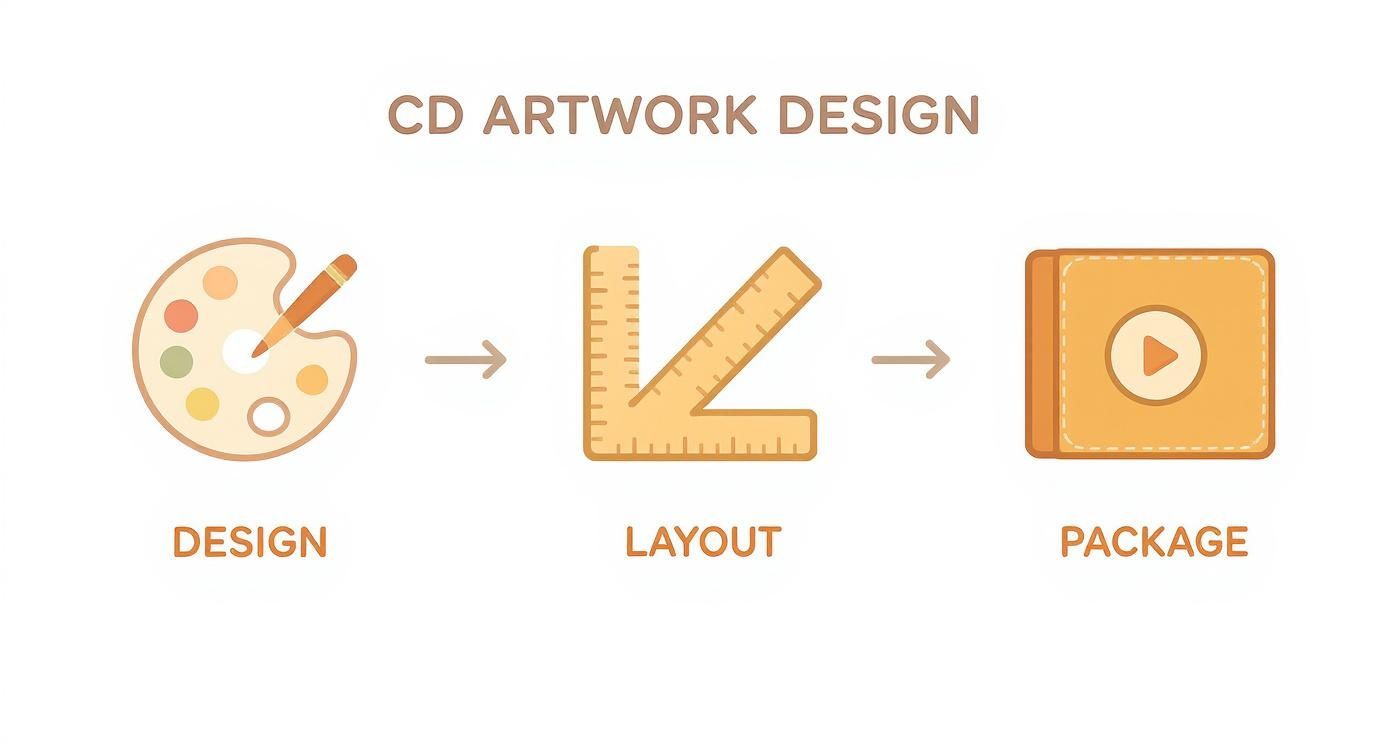
Following a simple workflow like this for your design, layout, and packaging helps you sidestep those last-minute headaches and ensures your visuals are just as impressive as your audio.
The final move? Get everything organized into one main folder. Inside that folder, create two subfolders: one for “Audio” and one for “Artwork.” It’s also a huge help to number your audio tracks in the order they should appear on the CD (e.g., 01_SongTitle.wav, 02_AnotherSong.wav).
A well-organized file package is the secret to a smooth production process. It eliminates guesswork and helps services like Mixtape Duplication deliver a perfect product without delays.
By taking these few extra steps, you’re paving the way for a successful project. We’ve seen it time and time again—proper file prep makes all the difference, and it’s a huge part of the Mixtape Duplication service philosophy.
Bringing It All Home: Placing Your Order
Alright, you’ve done the hard work. Your audio is polished, the artwork looks incredible, and everything is organized and ready to go. Now for the fun part: turning those files into a real, physical custom cd mix.
This last step is all about crossing the finish line. It starts on the order form, where you’ll lock in your quantity and packaging choices.
Are you making a single, deeply personal mixtape for a friend? Or maybe you’re getting a bigger batch ready for a wedding or to sell at your band’s merch table? The process is the same. Just pick the number you need. For larger events, it almost always makes sense to order in bigger quantities, like these bulk CD packages, to get a better price per disc.
Don’t Skip the Digital Proof
Once your files are uploaded, you’ll get a digital proof back from us. I can’t stress this enough: this is your last chance to catch any mistakes.
Take your time with it. Read every word on the artwork to hunt for typos. Make sure the tracklist is in the perfect order. Check that your images are crisp and clear. If you rush through and approve a proof with an error, that same mistake will be on every single CD.
This commitment to getting it right is a huge part of what makes physical media so special. It’s a permanent creation. In fact, despite the streaming boom, the global compact disc market was still valued at around $1.6 billion in 2023. While things have changed, the fact that people still invest in CDs shows how much we value having something tangible. You can dig into the numbers with these CD market insights on dataintelo.com.
Treat the digital proof as the final version of your project. Every detail, from the text on the back cover to the image on the disc face, should be exactly as you want it.
Once you give the final “okay,” your order heads into production. Depending on how many you ordered and the complexity of the packaging, you can expect a turnaround time of a few business days to a week. Before you know it, a box of your very own professional, custom-made CDs will be on its way to your doorstep.
Got Questions About Your Custom CD Mix?
As you get ready to finalize your project, a few last-minute questions usually pop up. It’s totally normal. Getting the right answers now ensures your custom CD mix will be perfect, with no weird surprises when it arrives.
How Much Music Can I Actually Fit on a CD?
This is easily one of the most common questions we get. A standard CD-R can hold up to 80 minutes of audio.
But here’s a pro tip: I always tell people to aim for around 78-79 minutes. Leaving that little bit of breathing room helps prevent burning errors and makes sure your disc plays flawlessly, even in older, more finicky CD players.
Can I Just Pull Songs from Spotify or Apple Music?
That’s going to be a hard no. You can’t use tracks directly from streaming services for your mix. All that music is locked down with DRM (Digital Rights Management) to prevent illegal copying.
For your project, you have to use audio files you actually own. Think WAVs or MP3s you’ve purchased from digital stores or ripped from CDs you bought.
The simple rule is ownership. If you legally bought the track as a file you can download, you’re good to go. If you’re just “renting” it with a monthly subscription, it’s off-limits.
Duplication vs. Replication—What’s the Difference?
You’ll hear these two terms thrown around, and knowing which one you need is pretty important.
- Duplication: This is what we do for personal mixes. We “burn” your audio onto high-quality, blank CD-Rs. It’s fast, affordable, and the perfect choice for smaller orders (anything under 500 copies).
- Replication: This is the big-league, industrial process. It involves creating a glass master disc to physically stamp out thousands of copies. Think major label album releases.
For any personal custom CD mix, duplication is what you’re looking for. It’s the right tool for the job.