
How to Get Music Gigs: A Step-by-Step Blueprint for 2026
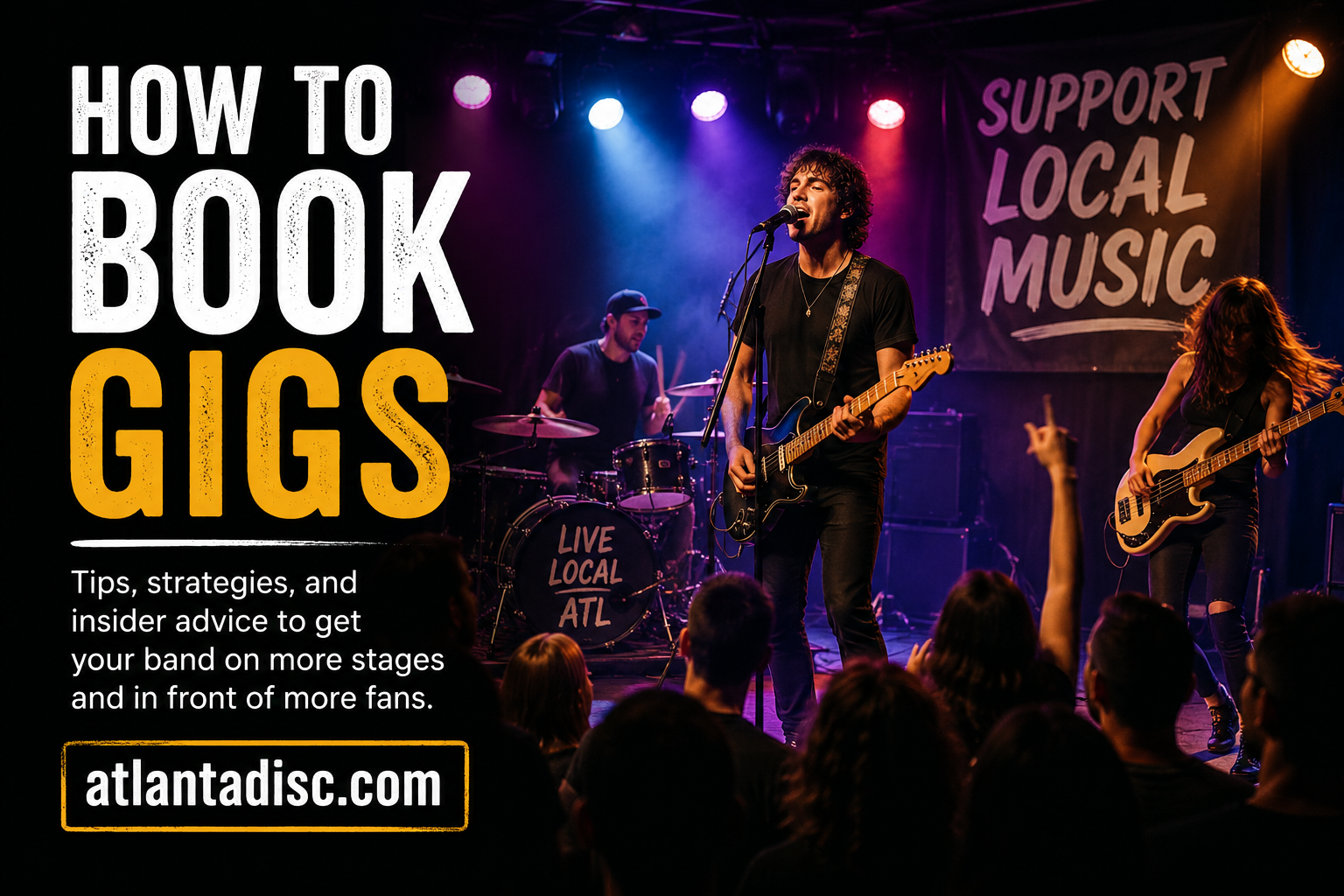
You’ve got songs. You’ve rehearsed. You’ve played enough free sets to know you can hold a room. But your calendar still looks empty, or worse, full of random low-paying shows that don’t lead anywhere.
That’s the spot most artists get stuck in. They assume talent should create momentum on its own. It doesn’t. Venues book acts that make their job easier, lower their risk, and help sell the night.
If you want to learn how to get music gigs consistently, stop treating booking like a lucky break and start treating it like a system. The artists who work steadily usually aren’t the ones waiting to be discovered. They have materials ready, a clear target list, a repeatable outreach process, a real promotion plan, and enough business sense to make sure the gig helps the career instead of draining it.
Your Talent Is Not Enough Get Your Business in Order
A lot of good artists stay invisible because they’re operating like hobbyists while asking to be treated like professionals. They send a message with no live video, no clear genre, no audience proof, no rate in mind, and no plan to promote. Then they wonder why nobody answers.
Booking managers aren’t judging your soul. They’re scanning for risk.
They want to know a few simple things. Can you fit the room? Can you draw people? Can you communicate like an adult? Can you show up prepared? Can they put you on the calendar without creating extra problems for the staff?
That shift matters. Once you understand that gigs are booked through trust, not just taste, your next moves get clearer.
Practical rule: A venue rarely says yes because your music is “good.” It says yes because your act looks bookable.
Being bookable means your art and your operations line up. Your songs have to be solid. Your live show has to work. But your backend also has to be clean. That includes your EPK, your contact info, your live clips, your target list, your outreach cadence, your pricing logic, and your follow-up habits.
Artists who get steady work usually do a few unglamorous things well:
- They stay organized: they know who books each room, when they reached out, and what happened next.
- They present clearly: one good email beats five emotional paragraphs.
- They think in terms of fit: they chase rooms that match their sound, draw, and stage setup.
- They protect margins: they know the difference between a useful low-pay slot and a dead-end gig.
A lot of careers either build or stall at this stage. If your current approach is “send messages and hope,” that’s fixable. The rest of this blueprint is about building a machine that books shows, fills rooms, and leaves you with enough money to keep going.
Build Your Booking Engine The Essential Artist Toolkit
Before you pitch anyone, get your materials into one tight package. A booking manager should be able to understand your act in a minute or two. If they have to hunt through your Instagram, guess what genre you play, or figure out whether you’ve ever touched a stage, you’ve already made the process harder than it needs to be.

Build an EPK that answers booking questions fast
A good EPK is not a scrapbook. It’s a sales tool. Keep it clean and current.
Include these core pieces:
- A short bio: say what you sound like, who your audience is, and what kind of rooms you play well.
- High-quality photos: one strong press image does more work than a folder of average shots.
- Streaming links: make it easy to hear your best material quickly.
- Live video: venues book live acts, not studio files. Show the act in a room.
- Contact details: one booking email, easy to find.
- Relevant show history: mention support slots, local rooms, festival appearances, or community events if they help establish fit.
If you’re a rapper, DJ, church music team, singer-songwriter, or band, the exact packaging can vary. The principle doesn’t. Reduce friction.
Bring proof, not just enthusiasm
The biggest upgrade in modern booking is audience data. If you know where your listeners are, you can pitch with evidence instead of vague promises. According to Viberate artist stats, artists who analyze fanbase demographics before pitching secure up to 40% more live performances in targeted regions.
That matters because promoters care about local demand. If your listeners cluster near the city you’re pitching, say that plainly. Don’t write, “We have a growing fanbase.” Show that there’s real local interest.
A useful one-page summary for outreach can include:
| Asset | What it should prove |
|---|---|
| Live video | You can hold attention on stage |
| Audience analytics | You have listeners near the venue |
| Strong photo | You present professionally |
| Short bio | You fit a specific type of room |
| Music links | Your sound matches the bill |
The strongest pitch materials feel like they were built for the buyer, not for the artist’s ego.
Don’t ignore physical promo
Most young artists lean fully digital. That’s a mistake in local and regional booking. Physical items still help people remember you, especially in crowded scenes where everybody is sending the same links.
Simple tools work:
- Business cards with a QR code: fast handoff after a set or networking conversation.
- Short-run CDs or mixtapes: still useful for certain genres, church distribution, local press, and in-person meetings.
- Flyers or mini one-sheets: especially effective when you’re supporting another act and meeting promoters face-to-face.
- Download or streaming cards: a clean bridge between physical contact and digital listening.
For artists who want short-run physical pieces, Atlanta Disc offers CDs, download cards, flyers, posters, and related print items in smaller quantities, which can make sense when you need materials for a local push without overordering.
The toolkit doesn’t need to look expensive. It needs to look intentional. If your materials tell a clear story, your outreach starts from a position of professionalism instead of apology.
Prospecting Like a Pro Find Venues That Will Actually Book You
Friday night. You send ten emails to rooms you’d love to play. By Monday, you have one reply, two bounced addresses, and seven venues that were never going to book your act in the first place.
That is a prospecting problem, not a talent problem.
Artists lose weeks chasing the wrong rooms because they book from ego instead of fit. A five-piece rock band does not belong in a quiet listening-room cafe built for singer-songwriters. A mellow acoustic duo will struggle in a late-night room that sells energy, volume, and bar traffic. Good prospecting starts with a simple business question: where does your set help a venue make money, keep the crowd happy, and justify bringing you back?

Build a target list that reflects your current market
Start with rooms you can realistically fill, support, or fit well right now. Then expand outward by radius, not fantasy. Local rooms become regional rooms when you can show repeat turnout, clean promotion, and a history of making venues comfortable saying yes.
A working venue sheet should track:
- Venue name and city
- Type of room such as bar, club, church event space, brewery, listening room, festival, or private event venue
- Capacity
- Genre fit
- Booking contact
- Preferred contact method
- Recent acts
- Notes on stage size, sound, and audience style
- Date contacted and follow-up date
Keep it boring. Boring books shows.
I have seen artists with average materials and strong lists outperform artists with great songs and no system. A clean spreadsheet lets you spot patterns fast. Which venues book six months out. Which ones only answer Instagram. Which ones consistently use support acts from your scene. Which rooms look full online but rarely run original music.
Qualify venues before you spend a pitch on them
A venue is not a target because it exists. It is a target because your act solves a need there.
Check the calendar first. If similar artists are already on the bill, that is a good sign. If the room only books tribute nights, DJs, or cover bands, do not force an originals pitch into that slot. Watch crowd clips on Instagram and tagged posts. Seated audiences buy a different show than bar crowds that want fast turnover and familiar songs. Look at load-in realities too. A room with no backline, no sound tech, and a tiny corner stage may still work, but only if the pay and the exposure make sense.
Use a simple filter:
| Venue signal | What it usually means |
|---|---|
| Similar artists are booked regularly | Your act has a fair shot |
| Live music appears on the calendar every week | Music is part of the business model |
| Crowd photos show real turnout | The room can support a draw |
| No booking info and random scheduling | Expect informal or inconsistent communication |
The goal is not a huge list. The goal is a usable list.
Use audience data like a business owner
The strongest prospecting now combines street-level research with audience signals. If your streaming data, email list, ticket history, or social engagement is strongest in one city or pocket of a region, start there. If your videos perform best when you post stripped-down live clips, that may point you toward listening rooms, songwriter nights, and support slots instead of loud bar gigs. If your audience is broad online but thin in one market, a door deal in that city may be a bad business move even if the room looks impressive.
Analysts at Chartmetric found patterns in how independent acts with rising social momentum showed up in festival bookings. That matters because buyers are not only judging the songs. They are judging whether interest is building, where it is building, and whether that interest can convert into people in a room.
Data does not replace instincts. It sharpens them.
Mix digital research with old-school fieldwork
Some of the best venue intel still comes from going out. Show up early. Watch the opener. Count the room at 8:30 and again at 10:00. Notice what kind of merch table works there, what volume the room can handle, and whether the staff treats artists like partners or like a burden.
Talk to the bands who already play those rooms. Ask what they got paid, whether the venue promoted, how settlement worked, and whether they would go back. One honest conversation in the parking lot can save a month of bad outreach.
A venue earns a spot on your list when you can explain the fit in one sentence.
Prospecting is sales work. Done well, it protects your time, improves your close rate, and helps you book gigs that support a career instead of just filling a calendar.
The Perfect Pitch How to Contact Venues and Negotiate Pay
You found the right room, sent a thoughtful note, and got a reply. Good. This is the point where a lot of artists fumble the opportunity by writing too much, sounding vague on money, or agreeing to terms they never priced out.
A venue buyer is making a business decision, not grading your artistic sincerity. Give them enough information to say yes, enough proof to trust you, and a clear path to the next step.

Write the email like a professional
Your first message should fit on one screen. If a talent buyer has to hunt for the ask, you already made their job harder.
Use a simple structure:
- Subject line
State the act name and the purpose. - Opening
Say who you are and why you fit that specific room. - Proof
Include your EPK, one strong live video, and one or two relevant signals that show you can help the night. Local support, ticket history, streaming traction in that market, or recent support slots all work. - Ask
Ask for available dates, support opportunities, or the right booking window.
Here’s a template that works:
Hi [Name], I’m [Artist Name], a [genre] act based in [city]. I’m reaching out because [Venue Name] books artists in our lane, and our live set fits your room well.
EPK: [link]
Live video: [link]We’re booking [month or season] and would love to be considered for an opening slot or a headline date that fits your calendar.
Thanks, [Name]
[Phone]
[Booking email]
That is enough for first contact.
Skip the giant attachments. Skip the autobiography. Skip the line about how you are “ready to take the scene by storm.” Buyers hear that language all week. Specifics book shows.
Follow up with discipline
A lot of artists send one email, get no reply, and decide the venue is ignoring them. Sometimes that is true. More often, the buyer is buried in messages, working a live event, or booking months ahead.
Follow up on the same thread about a week later. Keep it short. If there is still no response, send one more note later if the room remains active and relevant. After that, stop. Revisit them when you have a stronger draw story, a better local tie, or a new date range.
Personalized outreach beats bulk outreach because it shows fit. It also keeps your reputation clean. Venue staff remember artists who communicate clearly and artists who waste time.
Negotiate pay like someone who plans to stay in business
This part decides whether the gig helps your career or drains it.
Too many artists treat the booking itself as the win. A successful booking is a deal that covers your costs, fits your market position, and leaves room to reinvest in the next show. If a date looks good on Instagram but loses money after travel, payroll, and promo, it is not a strong booking.
Price the gig before the venue asks. That means knowing your floor, your target, and the conditions that would make you flexible.
Start with the variables that change the value of the night:
- Set length
- Solo, duo, DJ set, or full band
- Travel and lodging
- Whether you provide PA, decks, microphones, or backline
- Type of event
- Whether you are expected to draw
- Merch potential
- What other paid work you are giving up to take the date
That last point matters. A Thursday support slot for no guarantee may be smart if it puts you in front of your next 100 fans. The same deal is bad if it blocks a better private event, costs you a hotel, and gives you no merch table.
Understand the common deal structures
| Deal type | Best use | Main risk |
|---|---|---|
| Guarantee | Predictable income | Harder to get if you have little ticket history |
| Door split | Test dates and early-stage rooms | A soft turnout can turn the night into a loss |
| Guarantee plus percentage | Strong option when you can sell tickets | Terms need to be clear before show day |
| Free opener | Strategic only if the room or headliner moves your career forward | Easy to normalize unpaid work |
If a venue asks what you charge, answer with a number or a tight range and a reason behind it. For example: “For a local trio set, we usually work off a guarantee of X. If you expect us to help drive presales, we can also discuss a lower base plus percentage.”
That tells the buyer three things fast. You know your market. You understand deal structure. You are not guessing.
Charge in a way that lets you keep playing. Exposure does not cover rehearsals, gas, strings, repairs, artwork, or physical promo.
I have taken lower guarantees when the room was right, the crowd fit the project, and the merch upside was real. I have also walked away from “great opportunities” that came with a long drive, no guarantee, and vague promises at the door. Both choices can be correct. The difference is whether you made the call on purpose.
Get the agreement in writing
Even local bar gigs need a written confirmation. An email is often enough if it spells out the terms clearly.
Confirm these points:
- Date and set times
- Compensation structure
- Load-in and soundcheck
- What gear is provided
- Ticket expectations or promo responsibilities
- Merch policy
- Who settles payment and when
This protects both sides. It also marks you as someone who handles shows professionally, which makes rebooking much easier.
Promote the Show and Pack the Room
Getting booked is only half the job. If nobody comes, the venue remembers that longer than it remembers your chorus.
The artists who keep getting called back usually make the venue feel supported. They don’t post a flyer once and disappear. They run a campaign.

Use a four-week push
The strongest local promotion is repetitive without being lazy. People need to see the show more than once before they act.
Disc Makers’ guide to getting gigs gives a useful benchmark here: bands with a 1,000-person email list average 75 attendees per gig, compared to 20 without a list. The same source notes that a 4-week pre-gig campaign with email and a $50 social ad spend can produce 5x ROI and convert up to 30% of your core mailing list into attendees.
A simple timeline:
- Week one Announce the date. Post a clean graphic, short live clip, or teaser.
- Week two Send an email to your list. Make the ask direct.
- Week three Run a modest targeted ad if the show matters. Push social proof and urgency.
- Week four Post reminders, set times, support acts, and any incentive that helps people decide now.
Mix digital and physical promotion
Local shows still respond to street-level effort. Digital gets attention. Physical creates memory.
A balanced promo stack can include:
- Email list outreach: your list is still your strongest owned channel.
- Short-form video: show rehearsal moments, snippets of the set, or a direct camera invite.
- Venue collaboration: repost their graphics, tag them, and make it easy for them to share you too.
- Flyers and posters: useful in music stores, coffee shops, rehearsal spaces, churches, campuses, and neighboring venues where your audience already gathers.
- Hand-to-hand promo: cards, flyers, or download pieces at other local gigs can outperform generic posts because the contact is personal.
If you can’t activate the people who already know you, more content won’t save the show.
Give people a reason to care now
Generic “come out tonight” posts don’t move many people. Specificity does.
Tell them what kind of night it is. New songs. Release-week set. Special guest. Local lineup. Early set time. Vinyl and CD on hand. DJ set after the band. Family-friendly show. Church event with community angle. Anything real is better than filler.
Also remember that promotion isn’t only for fans. Venue staff notices effort. Promoters notice effort. Other bands notice effort. Every show is a reputation event.
A packed room helps, but so does visible hustle. When a venue sees that you promote with discipline, you become easier to book again.
Master the Day-Of and Secure Your Next Booking
You load in at 5:30. Doors are at 7. The opener is late, the sound engineer is stretched thin, and the person who booked you is also running the bar. Nights like that decide whether you get invited back.
A strong set helps. A smooth night gets you rebooked.
The bands that work consistently treat show day like an operating job, not a creative mystery. They confirm details before arrival, keep their footprint tight, start and end on time, and make staff feel like the night is easier because they are on the bill. Talent gets attention. Professional habits get repeat dates, better slots, and stronger guarantees.
Handle the room like someone who expects to return
Staff is watching the whole picture. They notice whether you can solve problems without attitude, whether your guests are respectful, whether your merch setup clogs traffic, and whether your changeover burns ten extra minutes.
Use a short day-of checklist that protects both the show and the next ask:
- Confirm the advance: parking, load-in path, set length, backline, stage plot, and payout terms
- Meet the right people early: booking contact, house engineer, stage manager, and whoever settles payment
- Keep your setup tight: label cases, know your input list, and move gear fast
- Respect the clock: start on cue, end on cue, and save the encore fantasy for rooms that asked for one
- Collect audience data: QR signups at merch, email capture after the set, and quick notes on which songs or offers got a response
That last point matters if you want profitable gigs, not just more gigs. The room is giving you live market feedback. Which shirt sold first. Whether the crowd scanned your download card. How many people joined your list after a certain song. Which announcement moved people to the merch table. Artists who track that information make better booking decisions, build stronger offers, and waste less money on dead inventory.
Insurance matters too. Venues do ask about it, especially for private events, festivals, and better-run rooms. If you already handled that piece earlier, great. If not, fix it before it costs you a date.
Rebooking starts before you leave the building
Do not disappear after your set.
Thank the engineer. Thank the bartender. Thank the person who booked the night. If the show went well, ask a simple business question before you start packing the van: what dates or seasons usually work best here for an act like this?
That conversation works because it is timely and specific. You are not sending a vague “keep me in mind” note three weeks later. You are tying a good performance, a smooth night, and a clear ask together while the room still remembers you.
The follow-up the next day should be short and useful:
- thank them for having you
- mention one concrete positive from the night
- attach a strong photo or a short clip if you have one
- share any real result, such as solid turnout, merch movement, or good audience response
- ask about future dates
This is also where physical promo tools still pull their weight. A clean business card, a one-sheet left with the right person, or a download card handed to key contacts gives people something to remember after the inbox fills back up. Atlanta Disc offers short-run CDs, download cards, flyers, posters, and business cards that fit the practical side of gigging and merch tables, especially when you need small batches instead of a huge order.
One good night can turn into a standing relationship. That is how local careers become stable. You do the musical work, you run the room well, and you leave with more than applause. You leave with contacts, data, and a reason for the venue to book you again.