
How to Publish Your Music: An Indie Artist’s 2026 Guide
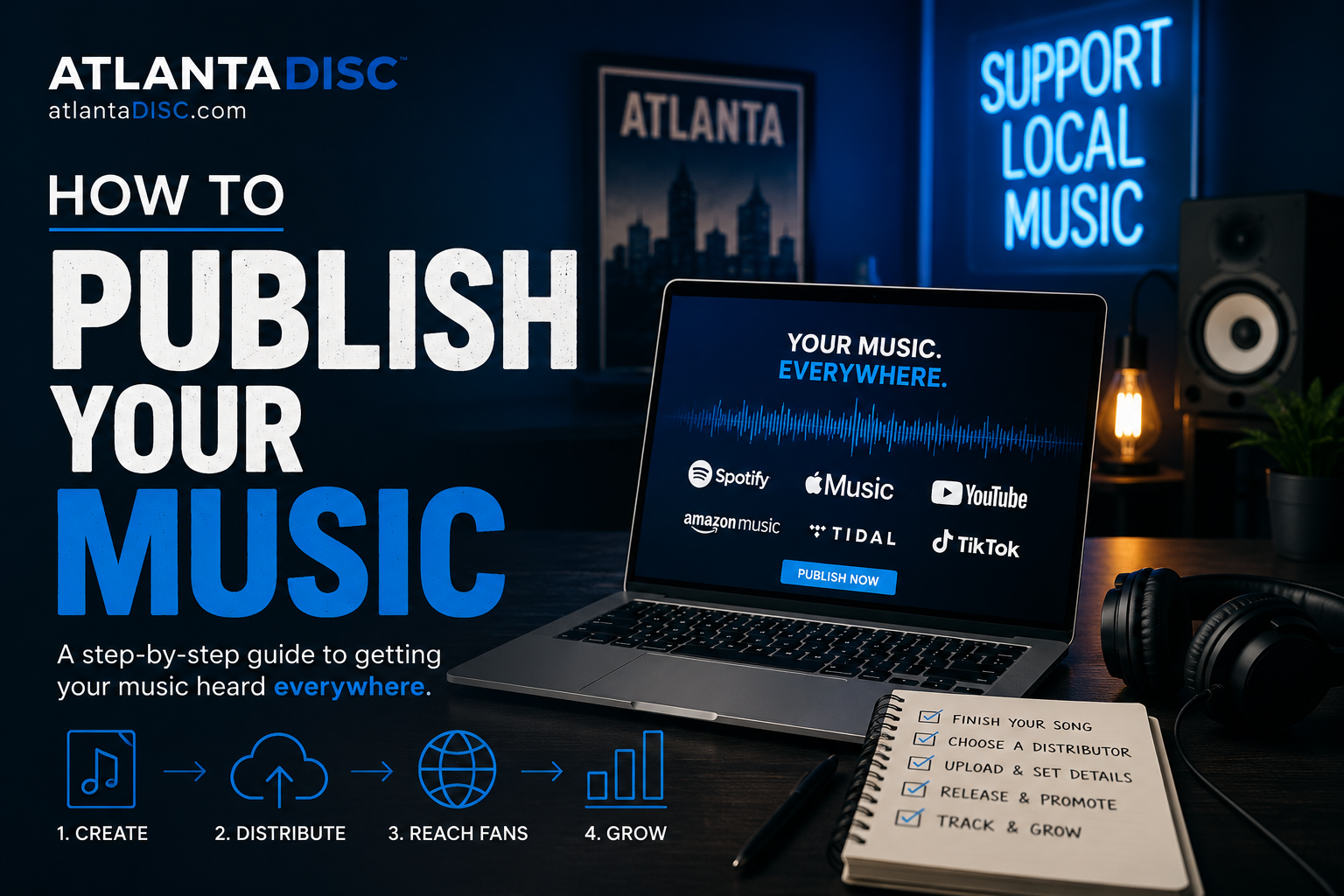
You’ve got the songs. The mixes are finally approved. Your cover art exists in three slightly different folders. Someone in the group chat keeps asking, “When are we dropping?” That’s usually the moment artists start thinking distribution is the whole job.
It isn’t.
If you want to understand how to publish your music, think like a rights holder, not just a creator. Publishing is the system that tells the industry who wrote the song, who owns what, where the metadata lives, and how money reaches the right people when the track gets played, streamed, performed, or licensed. A lot of first releases fall apart here. The music goes live, but the paperwork lags behind, splits are vague, and royalties end up delayed, misdirected, or missing.
The good news is that the process is manageable when you do it in the right order. The smarter approach is simple: prepare the assets, lock the ownership, choose a distribution setup that fits your situation, and build a release that connects physical touchpoints to digital listening. Most guides stop at “upload your song.” That’s too shallow for artists trying to build a real catalog.
Assemble Your Release Toolkit
Before you upload anything, build a release package that can survive contact with stores, distributors, collaborators, and rights organizations. Most problems that artists blame on “the system” start with missing files or sloppy metadata.

Start with the non negotiables
Your release toolkit needs three pieces in place before anything else:
- Final audio master. Not the “close enough” bounce. The actual approved master you want on streaming services, downloads, and any physical format.
- Cover artwork. It needs to look intentional, readable, and consistent with platform requirements.
- Clean metadata. Song title, artist name, featured artist formatting, writer names, producer credits, explicit flags, and version labels all need to match everywhere.
If one of those three is off, the release looks amateur fast. Worse, the wrong metadata can break royalty matching later.
A simple example. If your artist name appears one way in the distributor, another way in your PRO registration, and a third way in your split sheet, you’ve created work for yourself that didn’t need to exist. Use one approved spelling for every contributor and every title. Lock it early.
Treat split sheets like release insurance
Collaborations create excitement and confusion in equal measure. The beat was made in one session, the hook changed later, someone added a line in the studio, and now nobody remembers what was agreed to. That’s how avoidable disputes begin.
Practical rule: Complete the split sheet when the song is finished, not when the song starts making money.
Industry best practice is clear. Split sheets should be completed immediately after collaboration and before any money changes hands or the song is released, because PROs and the MLC need that ownership documentation to process royalties accurately. If artists skip that step, payments can be delayed or withheld, as explained in this publishing guidance on split sheets and registration timing.
Your split sheet should include:
- Legal names of every contributor, not just stage names
- PRO affiliation details for each writer
- Exact ownership percentages for the composition
- Song title and date
- Signatures or written approval from everyone involved
For rap records, DJ projects, and producer-led releases, this matters even more because credits often evolve after the first session. Don’t rely on text messages and memory.
Build one master release folder
Most artists scatter files across phones, laptops, inboxes, and cloud drives. That works until release week. Then nobody can find the final WAV, the clean cover, or the writer info.
Use one folder with clear subfolders:
| Folder | What goes in it |
|---|---|
| Audio | Final master, instrumental, clean version, acapella if needed |
| Artwork | Final cover, alternate promo crops, back cover if making CDs |
| Metadata | Titles, credits, writer splits, ISRC notes, release date |
| Legal | Split sheets, agreements, copyright records |
| Promo | Press photo, bio, teaser clips, release copy |
That setup sounds basic because it is. Basic systems are what keep releases from turning messy.
What’s essential and what can wait
Some artists overspend early on visuals and underinvest in accuracy. Others do the reverse and upload strong music with weak presentation. The better trade-off is balanced.
Essential now
- Finished master
- Approved artwork
- Split sheets
- Clean title and credit data
Useful but optional at first
- Lyric video
- Visualizer
- Full press kit
- Multiple cover variations
If money is tight, put your budget into things that affect ownership, discoverability, and professionalism. A plain but clean release beats a flashy release with broken paperwork every time.
Secure Your Royalties and Ownership
Release week goes sideways fast when a song is live on streaming services, fans are scanning a QR card at the merch table, and the royalty trail is still incomplete. The music can be available everywhere and still pay poorly if the ownership data was never set up correctly.

Set the paperwork before the release goes live
A clean rights setup follows a simple order:
- Register copyright
- Assign identifiers
- Register with collection organizations
- Distribute the recording
That sequence matters because each later step depends on the earlier one being accurate. According to Disc Makers’ guide to publishing workflow, artists should register copyrights, assign ISRCs for recordings and ISWCs for compositions, then upload to platforms so services can match usage to the right work and right owner.
Skipping steps creates avoidable problems. The song may still go live, but royalties can end up delayed, partially matched, or sitting unclaimed.
Know which rights belong to the recording and which belong to the song
New artists often mix these up. Stores and streaming platforms do not.
- ISRC identifies one specific sound recording
- ISWC identifies the composition
- UPC identifies the release product, such as a single, EP, or album
- PRO registration covers performance royalties tied to the composition
- MLC registration or publishing administration helps collect eligible mechanical royalties
That distinction matters even more in a hybrid release. If you press a short CD run or hand out streaming cards with QR links through Atlanta Disc, those physical promo tools can drive digital plays, but the back-end money still depends on the recording and composition being registered properly. Great promo gets attention. Clean ownership data gets paid.
Join a PRO with the right setup
Performance royalties come from public use of the composition. That includes radio, TV, venues, bars, coffee shops, and streams. Songwriters and publishers collect different shares, so artists who self-publish need to decide whether they are only registering as a writer or also setting up the publisher side of the catalog.
That choice affects real money. Songtrust’s guide to performance royalties and PROs explains the writer share and publisher share structure clearly, and it is the part many first-time releases miss.
A simple comparison helps:
| Path | Good fit for | Trade-off |
|---|---|---|
| Self-publishing | Solo artists with simple ownership | More admin work and more chances to miss registrations |
| Publishing administrator | Artists releasing regularly or seeing traction abroad | Admin fee in exchange for collection help |
| Traditional publisher | Writers with proven demand, cuts, or strong leverage | Less control and a more complex deal structure |
For a first or second release, self-publishing or a publishing administrator usually makes more sense than chasing a traditional deal.
Metadata errors cost money
Metadata is not busywork. It is the payment map.
A small mismatch can break the chain. One title says “Radio Edit.” Another says “Radio Edit (Clean).” A writer uses a stage name in one place and a legal name in another. A featured artist gets added at distribution but not in the composition registration. Those are common errors, and they are expensive.
Tracklib’s explanation of music publishing notes that streaming now accounts for over 70% of performance royalty payouts in major markets and that mismatched metadata contributes to unclaimed “black box” royalties estimated at $2 to $4 billion annually worldwide. That same source also explains that ISRC codes are unique 12-character identifiers for recordings.
Use one master metadata sheet and do not let every collaborator keep their own version. Include:
- Official song title
- Writer legal names
- Split percentages
- Producer credits
- Featured artist formatting
- ISRC
- ISWC when assigned
- PRO affiliation
- Release date
- Distributor delivery notes
This takes an hour or two to build and can save months of cleanup.
Know when to bring in help
Some releases are simple enough to handle alone. One artist, one producer, one clean split, one release date. That is manageable if you stay organized.
Get outside help when ownership is split across multiple writers, when you are releasing often enough that registration starts slipping, or when physical merch is part of the launch and you need every stream, scan, sale, and follow-up touchpoint connected properly. That is where a service partner can help keep the release tight. Atlanta Disc can handle the physical side, like short-run CDs or QR-linked streaming cards, while a publishing admin, rights specialist, or entertainment attorney helps sort the ownership side if the credits are messy.
The goal is simple. Make it easy for fans to find the music, and make it just as easy for royalty systems to find you.
Select Your Digital Distribution Path
Picking a distributor isn’t just a checkout decision. It’s a workflow decision. The wrong distributor can create friction every time you release, update metadata, split royalties, or move a catalog later.

The main paths artists choose
Most independent releases land in one of three buckets.
DIY aggregators
Services like DistroKid and TuneCore are built for speed. You upload your audio, artwork, metadata, and release date, and they deliver your music to major platforms.
This path works well if you’re comfortable managing details yourself. It usually makes sense for solo artists, producers releasing non-vocal tracks, and anyone putting out music consistently without needing much hand-holding.
Boutique distributors
Some smaller distributors offer more support, more curation, or a closer working relationship. That can help if you want human guidance, especially when you’re juggling multiple artists or a more complex catalog.
The trade-off is usually less automation or more selectivity. Some artists like that. Some find it too slow.
Direct and special arrangements
A small number of artists get direct relationships or custom setups through labels, management structures, or platform-specific deals. For a first release, that’s usually not where your attention should go. Build influence first.
Choose based on operating style
Don’t ask, “Which distributor is best?” Ask these instead:
- Do you need speed or support?
- Will you need royalty splits inside the platform?
- Do you release one artist, or several?
- Do you want publishing administration bundled in, or separate?
- Can you stay organized enough to manage metadata changes yourself?
If you’re organized, DIY tools are often enough. If your team is chaotic, the cheapest option can become the most expensive in time and mistakes.
A distributor gets your recording into stores. It does not replace split sheets, copyright registration, or publishing administration.
That misunderstanding causes a lot of confusion. Distribution and publishing overlap in practice, but they solve different problems.
Watch the agreement, not just the dashboard
A slick upload interface can hide annoying terms. Before you commit, check:
- Ownership language. You should understand what rights you keep.
- Takedown process. You may need to update or remove releases later.
- Split payout features. Useful for collaborations and label structures.
- Support response quality. Important when something goes wrong near release day.
- Publishing add-ons. Helpful if you want one account doing more of the admin work.
A short demo can help you spot what the sales page won’t. This walkthrough gives a useful look at how artists think through digital release setup:
What works and what doesn’t
What works is boring. Consistent metadata, realistic release dates, clear ownership, and a distributor whose interface you’ll use correctly.
What doesn’t work is switching platforms every few months, rushing uploads the night before release, or assuming your distributor handles every royalty type automatically. It usually doesn’t.
For labels, churches, and artists running a physical campaign beside the digital one, the better question isn’t only where the song lands online. It’s how your distribution plan supports the full release.
Bridge Physical Media and Digital Streams
A fan walks up after your set, says the song was strong, and asks where to find it. If the answer is “search my name next Friday,” a lot of that interest disappears before they get to the parking lot. Give them a physical item with a direct path to the music, and the odds improve fast.

That is the practical case for a hybrid release. Digital is still the main destination, but physical pieces help convert real-world attention into streams, pre-saves, email signups, and direct sales. As noted in this music marketing article on pre-saves and release strategy, physical products used as pre-sale vehicles can support pre-saves, which can strengthen a release campaign.
Use physical product to shorten the path
Physical media works best as a prompt to act now, not as a souvenir you hope people deal with later.
For a first release, that usually means simple formats:
- A short-run CD sold at shows before the digital release
- A QR-linked streaming card handed out after sets or at events
- A merch bundle with a direct listening link
- A signed CD or packaged item for core supporters who want something collectible
The job is straightforward. Reduce friction between hearing about the song and opening the right page.
I have seen this work best in rooms where discovery happens face to face. Shows, church foyers, conferences, listening events, pop-ups, community markets, and street-team handouts all reward a direct next step. A card with one clean QR code often does more than three reminder posts.
Why hybrid beats digital-only in some situations
A digital-only plan asks a new listener to remember too much. Your artist name, the spelling, the date, the right profile, the right song. That is fine for fans who already know you. It is weak for casual listeners who just met you.
A physical handoff cuts those steps down. Scan the code. Open the pre-save page or stream page. Done.
That matters even more for artists serving audiences that still respond to tangible product. Hip-hop releases, DJ projects, ministry music, spoken word, local compilations, and event-based records all benefit from having something people can carry home or hand to a friend.
A good physical piece keeps working after the conversation ends.
Pick the format that matches the job
Do not order physical product because it feels like part of being an artist. Order it when it supports a specific release goal.
| Format | Best use | Why it helps |
|---|---|---|
| Short-run CD | Shows, local sales, merch table | Gives supporters something collectible and creates a direct sale point |
| QR streaming card | Release events, conferences, street promo | Sends people straight to the stream or pre-save page |
| Digipak or premium package | Superfan bundle, gift item | Feels substantial and supports higher-priced bundles |
| Download card insert | Shipped merch orders | Adds a clear digital action to a physical purchase |
Short runs are usually the safer call for indie artists. Boxes of unsold discs are expensive lessons. If demand is untested, print fewer and make sure every piece points back to the digital release.
Where a service partner helps
If you want physical pieces without committing to a large manufacturing order, use a company that handles short-run CDs, printed packaging, and QR-linked streaming or download cards. Atlanta Disc is one example.
That kind of partner makes sense when the physical item supports the campaign instead of becoming the campaign. If you are playing shows, mailing promo kits, building VIP bundles, or serving an audience that still buys discs, outside help can save time and prevent production mistakes. If you only need a few cards for one event, keep it lean and avoid overbuilding.
Common mistakes
These are the misses that waste money:
- Printing before titles, credits, and artwork are final
- Sending QR traffic to a homepage instead of a direct action page
- Ordering product before the release plan is clear
- Making too many formats for a small audience
- Treating physical copies like passive merch instead of active promotion
Physical media still matters. Its role changed. Used well, it gives your digital release a stronger entry point, especially when attention starts in the room before it shows up online.
Engineer a High-Impact Release Day
Release day starts weeks before the music goes live. The artists who get traction usually don’t have better luck. They have a better calendar.
Build backwards from the date
Choose a release date with enough room for uploads, review, playlist pitching, and pre-release content. Last-minute releases are possible, but they kill your options. If you want editorial consideration through artist portals, time matters.
Use a simple runway:
- Lock the release date once the master, artwork, and rights data are stable
- Upload early so you can catch store errors and profile issues
- Set up pre-save or pre-order links
- Prepare short-form content tied to one message, not ten competing ideas
- Pitch through artist dashboards as soon as the release appears there
That last point gets overlooked. Don’t wait until the week of release to open Spotify for Artists or Apple Music for Artists and start learning the interface.
One campaign, one clear ask
Artists often weaken a release by trying to promote everything at once. The single. The merch. The behind-the-scenes video. The contest. The live event. The whole catalog. Pick one priority.
For most first releases, the clearest ask is one of these:
- Pre-save the single
- Watch the visualizer on release day
- Join the release show
- Buy the bundle before launch
Everything else should support that action. If your audience doesn’t know what you want them to do, they usually do nothing.
Use playlist pitching correctly
Editorial playlist pitching isn’t magic, but it’s worth doing. The pitch should be factual, short, and specific. Mention the sound, the audience, the mood, and any real context that helps a curator place the song.
Good pitching habits:
- Describe the track plainly instead of stuffing in hype language
- Mention collaborators if they matter to the identity of the song
- Connect the release to a real moment, such as a tour date, event, or series
- Submit early, because late pitches reduce your options
Bad pitching habits:
- Overwriting the story
- Calling every song genre-defying
- Making claims you can’t support
- Submitting after the release is already out and expecting the same result
The algorithm notices activity. Humans notice clarity.
Release day execution
On the day itself, keep the machine simple and responsive.
Morning checklist
- Confirm the song is live everywhere it should be
- Check artist profiles and artwork
- Update bio links
- Post the main release asset first, not an afterthought
During the day
- Reply to comments and DMs
- Repost fan shares
- Push one direct link consistently
- Keep your team aligned on messaging
By evening
- Share proof of life, such as crowd response, fan posts, or a performance clip
- Remind late viewers where to listen
- Save your best-performing content for follow-up posts, not just day one
Release day isn’t the finish line. It’s the moment your preparation gets tested in public.
Fuel Your Growth After Launch
Three days after release, the loudest spike is usually over. That is when useful work starts.
A new artist will often stare at total streams, feel either relieved or disappointed, and miss the signals that shape the next month. Post-launch growth comes from reading behavior, not just counting plays.
Read the platforms like a working artist
Spotify for Artists and Apple Music for Artists are practical tools if you know what to look for. Focus on listener behavior you can act on.
Track:
- Which songs keep people listening
- Which cities and regions respond first
- Which playlists, profiles, or shares send traffic
- Whether listeners save the song, replay it, or drop off early
Use that information for decisions with real consequences. If one city is outperforming the rest, test ads there, look for a support slot there, or send physical promo there first. If listeners are saving a song but not finishing the next track, your follow-up release plan may need work more than your marketing does.
I also look at what is happening off-platform. If a short-run CD, QR card, or merch table handout is pushing people into streams, that matters. Artists using Atlanta Disc pieces for shows, listening parties, or street-team drops can often see which songs keep converting after the in-person moment ends. That hybrid physical-to-digital trail is easy to miss if you only judge the release by social engagement.
Keep promoting after the post goes quiet
The song still needs fresh entry points after launch week. Good catalog records rarely grow from one announcement post.
Use a simple post-release rhythm:
- Performance clips
- Lyric moments
- Producer or writing breakdowns
- Fan reactions
- Email updates
- Setlist placement at shows
- Acoustic or alternate versions when they add something real
The trade-off is time. You do not need seven new assets every week. Two strong follow-up pieces usually beat a pile of rushed content. If you have no team, keep the format repeatable so you can stay consistent without burning out.
Turn your admin setup into a review habit
Section 2 covered the ownership and royalty side. After launch, the job is to check whether your registrations and metadata are lining up with real-world activity.
If one song starts getting playlist traction, live play, sync interest, or sustained repeat listening, review it first. Make sure titles match across distributor records, PRO registrations, split sheets, and any alternate versions. Small metadata mistakes are boring until money starts coming in and someone has to fix them retroactively.
This is also the point where outside help can make sense. A distributor will not solve every publishing or catalog problem for you. If your release has multiple collaborators, several versions, or a physical promo component tied to a digital campaign, organized fulfillment and metadata support can save hours of cleanup later.
Build a repeatable system
Independent careers usually grow through repeatable habits, not one big week.
| Timing | Action |
|---|---|
| Weekly | Review artist dashboard trends, fan messages, and top traffic sources |
| Monthly | Refresh your content bank, email list, and live promo plan |
| Per release | Reuse your metadata sheet, split-sheet workflow, and launch assets |
| Quarterly | Audit registrations, smart links, physical stock, and catalog accuracy |
Artists who last keep their catalog clean, keep learning from each release, and keep giving listeners a reason to come back.
The Ultimate Music Publishing Checklist
Use this before every release.
- Final master approved
- Confirm the audio file is the actual release version.
- Export cleanly named files for every version you need.
- Artwork finished
- Use one final cover image.
- Make sure the title and artist name match your metadata exactly.
- Metadata sheet completed
- Include song title, artist name, featured artist formatting, writer legal names, producer credits, and release date.
- Keep one master document so every platform gets the same information.
- Split sheets signed
- Complete them as soon as the collaboration is done.
- Don’t wait until release week or after money starts showing up.
- Copyright registration handled
- Register ownership before distribution.
- Keep your confirmation records organized with the release files.
- ISRC and ISWC workflow handled
- Assign the recording identifier to each track.
- Make sure the composition data stays consistent across versions.
- PRO setup complete
- Join a PRO as needed for your situation.
- Make sure songwriter and publisher information is accurate.
- Publishing admin decision made
- Decide whether you’re self-publishing or using an administrator.
- Don’t assume distribution alone covers publishing collection.
- Distributor chosen
- Review the terms, support quality, payout structure, and update process.
- Upload early enough to fix errors before release day.
- Pre-release campaign built
- Set one main goal, such as pre-saves, bundle sales, or a release event.
- Use one consistent link and one clear audience action.
- Playlist pitching submitted
- Use artist portals early.
- Keep the pitch short, factual, and specific.
- Physical support planned if useful
- Choose CDs, cards, inserts, or bundles only if they support the release strategy.
- Make sure printed materials send people to a direct listening or pre-save destination.
- Release day content scheduled
- Prepare your main post, follow-up assets, and fan engagement plan.
- Check all live links once the release is up.
- Post-launch promotion mapped out
- Plan follow-up content beyond launch week.
- Watch your artist dashboards and adjust based on real response.
For indie artists
- Lock producer and writer splits early, especially on rap, remix, and multi-producer sessions.
- Don’t let a “we’ll figure it out later” conversation turn into a royalty dispute.
For churches and music ministries
- Keep contributor records organized across songs, arrangements, and recurring teams.
- Match physical distribution plans, such as CDs or event handouts, with the same titles and credits used online.
If you want help producing the physical side of a release without turning it into a massive manufacturing project, Atlanta Disc offers short-run CDs, printed packaging, and QR-linked download or streaming cards that can support a hybrid launch. For artists, DJs, churches, and indie labels, that can make it easier to connect in-person promotion with your digital release plan.